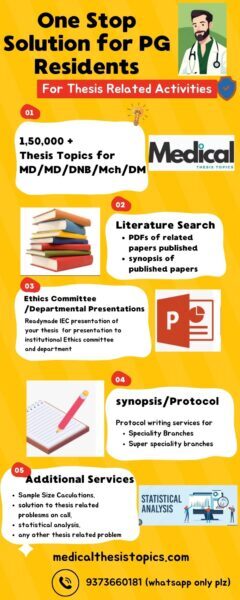
Remember Subscribing to the premium thesis topics not only will enable you to browse through premium thesis topics but also you will get access to online guidance about synopsis writing, sample size calculation, inclusion and exclusion criteria and guidance throughout thesis writing. In case you dont subscribe still do not hesitate to contact me for guidance.
Below is the list of 100 free Surgery thesis topics for MD/DNB. You can select any good Surgery thesis topics for MD/DNB from here. For more thesis topics you can avail the service of premium Surgery thesis topics. The premium Surgery thesis topics include list of 2000+ premium and updated Surgery thesis topics as well as recent Surgery topics which has been published in various national and international Surgery journals.
Though Surgery thesis topics can be searched online and for this purpose various Surgery journals can be browsed but its a time consuming process. We have collected all important Surgery thesis topics by painstakingly browsing through past and present issues of Surgery journals. Not only the Surgery journals but also we have compiled the list of all top Surgery thesis topics by physically going through the libraries of various medical colleges.
Needless to say collecting thousands of Surgery thesis topics at one place was a time consuming job. You can browse all these Surgery thesis topics by subscribing to premium Surgery thesis topics. Please share this page with your friends who may be searching for good Surgery thesis topics.

Recent MS General Surgery thesis work in Indian teaching hospitals shows increased focus on minimally invasive surgery, gastrointestinal diseases, hernias, breast and thyroid disorders, and surgical outcomes. Popular and examiner-friendly areas for the 2025–2026 academic year include:
Comparative study of postoperative outcomes in laparoscopic versus open cholecystectomy in patients with acute cholecystitis.
Observational study of complications in patients undergoing ileostomy versus colostomy for colorectal malignancies.
Prospective evaluation of early enteral feeding versus delayed feeding after elective gastrointestinal surgeries.
Study of incidence and management of anastomotic leaks in colorectal surgeries in a tertiary care hospital.
Cross-sectional analysis of quality of life in patients with stoma following colorectal cancer surgery.
Comparative study of clinical outcomes in patients undergoing laparoscopic versus open appendectomy.
Study on the prevalence and risk factors for incisional hernia following midline laparotomies.
Observational study on postoperative ileus and its predictors in elective abdominal surgeries.
Prospective evaluation of wound infection rates in gastrointestinal surgeries using different prophylactic antibiotic regimens.
Comparative analysis of outcomes of pylorus-preserving versus conventional pancreaticoduodenectomy.
Observational study on postoperative complications in patients undergoing Whipple’s procedure.
Comparative evaluation of outcomes of early versus delayed laparoscopic cholecystectomy in gallstone pancreatitis.
Study of liver function recovery in patients after resection for hepatocellular carcinoma.
Prospective analysis of bile leak incidence following hepatic resections.
Cross-sectional study on imaging findings correlation with intraoperative findings in choledocholithiasis.
Comparative study of endoscopic versus surgical management of pancreatic pseudocyst.
Evaluation of risk factors for surgical site infections after liver surgery.
Observational study of postoperative pancreatitis following biliary surgery.
Comparative outcomes in patients undergoing laparoscopic versus open hydatid cyst excision.
Study on the efficacy of ERAS protocol in pancreatic surgeries.
Comparative study of pain and recovery in breast-conserving surgery versus modified radical mastectomy.
Study of quality of life and psychological outcomes post-surgery in breast cancer patients.
Evaluation of surgical complications in patients undergoing thyroidectomy with and without nerve monitoring.
Cross-sectional analysis of hypocalcemia incidence after total thyroidectomy.
Comparative outcomes of hemithyroidectomy versus total thyroidectomy in multinodular goitre.
Study of the accuracy of fine needle aspiration cytology in predicting malignancy in thyroid nodules.
Observational study on the incidence of seroma formation post-mastectomy and its management.
Comparative evaluation of patient outcomes in open versus laparoscopic adrenalectomy.
Prospective study of wound healing and infection rates in diabetic patients undergoing breast surgery.
Observational study of recurrence rates in patients undergoing breast-conserving surgery with versus without radiotherapy.
Observational study on the pattern and outcome of abdominal trauma in a tertiary care center.
Comparative evaluation of outcomes in blunt versus penetrating chest trauma.
Study of predictors of morbidity in polytrauma patients managed conservatively versus operatively.
Prospective study of surgical outcomes in patients with perforation peritonitis managed by primary repair versus diversion.
Cross-sectional study on factors affecting mortality in head injury patients undergoing surgical intervention.
Comparative analysis of delayed versus early surgery in patients with splenic trauma.
Evaluation of outcomes in emergency laparotomy for non-traumatic versus traumatic abdominal emergencies.
Observational study on incidence and risk factors for compartment syndrome in lower limb trauma.
Prospective study of wound infection rates in patients with traumatic bowel perforation.
Comparative study of outcomes in early versus delayed debridement in open fractures.
Comparative evaluation of recurrence rates in patients undergoing laparoscopic versus open inguinal hernia repair.
Study of postoperative pain and recovery in patients undergoing mesh repair with different types of mesh.
Cross-sectional study of risk factors associated with incisional hernia in patients with previous abdominal surgeries.
Prospective analysis of seroma formation in patients undergoing laparoscopic ventral hernia repair.
Observational study of outcomes in patients with recurrent hernia undergoing redo surgery.
Comparative evaluation of tissue-based repair versus mesh repair in umbilical hernia in rural settings.
Study of quality of life in patients with complex abdominal wall reconstruction.
Prospective study on preoperative risk stratification and outcomes in hernia surgery in elderly patients.
Observational study on chronic groin pain following inguinal hernia repair and associated factors.
Comparative study of cost-effectiveness of laparoscopic versus open hernia surgery in a government hospital.
Observational study on complications of arteriovenous fistula creation in chronic kidney disease patients.
Comparative outcomes of endovascular versus open surgery in patients with peripheral arterial disease.
Prospective evaluation of postoperative pulmonary complications in thoracic surgeries.
Cross-sectional study of deep vein thrombosis incidence in postoperative general surgery patients.
Comparative study of outcomes in patients undergoing thoracotomy for empyema versus video-assisted thoracoscopic surgery.
Study of the role of preoperative spirometry in predicting postoperative lung function in thoracic surgery.
Observational study on early graft failure in patients undergoing bypass surgery for peripheral vascular disease.
Prospective study of outcomes in patients with varicose veins undergoing surgical versus laser treatment.
Comparative analysis of outcomes in rib resection versus decortication in empyema thoracis.
Study of wound healing complications in patients undergoing vascular surgery with diabetes mellitus.
Comparative study of outcomes in percutaneous nephrolithotomy versus open nephrolithotomy for large renal calculi.
Cross-sectional study of urinary tract infections following different types of catheterization.
Observational study on complications in patients undergoing transurethral resection of the prostate.
Study of long-term outcomes in patients undergoing ureteric reimplantation for vesicoureteral reflux.
Comparative evaluation of laparoscopic versus open nephrectomy in non-functioning kidneys.
Prospective analysis of erectile dysfunction in patients undergoing pelvic surgery.
Study of recurrence rates and outcomes in bladder tumor patients treated with intravesical therapy versus surgery.
Observational study on urological complications in pelvic fracture patients.
Comparative study on renal function changes post-partial versus radical nephrectomy.
Prospective study on continence outcomes following different techniques of urethroplasty.
Comparative analysis of outcomes in split-thickness versus full-thickness skin grafts in burn patients.
Study on psychological impact and quality of life after reconstructive surgery for cleft lip and palate.
Cross-sectional analysis of complication rates in flap surgeries for diabetic foot ulcers.
Prospective evaluation of outcomes in patients undergoing post-mastectomy breast reconstruction.
Study of wound healing and graft uptake in chronic ulcers treated with VAC therapy versus conventional dressing.
Comparative study on aesthetic outcomes of Z-plasty versus primary closure in post-burn contractures.
Observational study on functional outcomes after tendon transfer surgeries in hand injuries.
Prospective analysis of donor site morbidity in patients undergoing free flap surgery.
Study of outcomes in patients undergoing scar revision surgery for post-traumatic facial scars.
Comparative study of outcomes of dermal substitutes versus autologous skin grafts in large wounds.
Comparative study of outcomes in patients undergoing stapled versus conventional hemorrhoidectomy.
Study on recurrence and incontinence in patients treated for complex anal fistula using different surgical techniques.
Observational study on postoperative complications in patients undergoing low anterior resection.
Prospective analysis of anal sphincter injury in women following surgical treatment of obstetric fistula.
Cross-sectional study of quality of life in patients with ileostomy versus colostomy after rectal cancer surgery.
Comparative evaluation of wound healing in patients with chronic anal fissures treated with surgery versus botulinum toxin injection.
Observational study on fecal incontinence in elderly patients following anorectal surgeries.
Study of postoperative pain and return to work in patients undergoing minimally invasive anorectal surgeries.
Comparative outcomes in patients undergoing laparoscopic versus open anterior resection for rectal cancer.
Prospective evaluation of surgical site infections in colorectal surgery using different bowel preparation regimens.
Comparative evaluation of robotic-assisted versus laparoscopic colorectal surgeries in terms of short-term outcomes.
Study on the role of artificial intelligence in predicting surgical outcomes in gastrointestinal malignancies.
Observational study of postoperative outcomes in patients undergoing day-care laparoscopic cholecystectomy.
Evaluation of ERAS protocol adherence and outcomes in elective colorectal surgeries.
Study of patient-reported outcomes using mobile health applications in postoperative recovery monitoring.
Prospective study of barbed versus conventional sutures in laparoscopic surgeries.
Analysis of outcomes of single-incision laparoscopic surgery versus conventional laparoscopy in appendectomy.
Cross-sectional study on adoption and challenges of tele-surgery among surgical trainees.
Study on 3D printing-assisted preoperative planning in complex abdominal wall reconstructions.
Comparative outcomes of laser hemorrhoidoplasty versus conventional hemorrhoidectomy in Grade III hemorrhoids.
Select a topic that aligns with the common surgical case load in your OPD, wards and OT. Feasible MS General Surgery thesis topics include gallbladder disease, hernias, appendicitis, intestinal obstruction, perforation peritonitis, diabetic foot, thyroid disorders, and breast lesions. Avoid rare tumors, uncommon emergencies or highly specialised procedures unless your centre manages them routinely.
Commonly accepted designs include prospective observational studies, retrospective record reviews, comparative outcome studies (e.g., laparoscopic vs open), clinico-pathological correlations, and pre–post intervention outcome analyses. Randomised trials are uncommon due to logistical and ethical challenges, so observational studies are most preferred and practical.
Discuss expected case volume, availability of investigations (USG, CT, labs), operative support, follow-up feasibility, data availability, and whether similar MS General Surgery topics were recently approved. A topic with steady patient flow and simple, measurable outcomes ensures smooth completion and better acceptance by examiners.
© 2025 Medical Thesis Topics
© 2025 Medical Thesis Topics