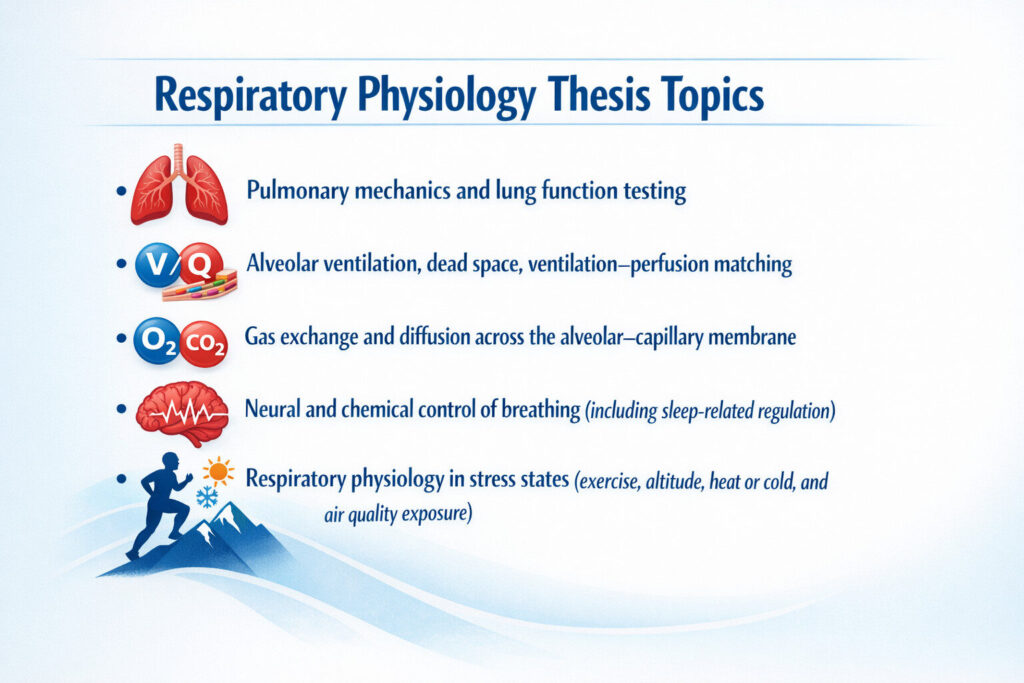
This page collects respiratory physiology thesis topics for MD Physiology postgraduates and MSc (Medical Physiology) candidates, arranged across pulmonary function testing and spirometry, respiratory muscle function and exercise, obesity and occupational exposure, air pollution and tobacco, and the autonomic, sleep and postural interfaces of breathing. Each design has been chosen so that it can be completed inside a single thesis period using volunteers who are already available in a teaching institution and using instruments a physiology laboratory already owns — a calibrated spirometer, a peak flow meter, a stadiometer, a measuring tape, a pulse oximeter and validated questionnaires. The same list serves candidates searching for respiratory physiology research topics for a departmental or funded project rather than a degree thesis. Once a topic is settled, the next step is a physiology protocol and a physiology synopsis written to the university format, with the reference equation, the acceptability criteria and the sample size all fixed on paper before the first volunteer blows into the mouthpiece.
Last reviewed and updated: August 2026
📌 Updated for 2026–2027 MD and MSc Physiology admissions
Every topic on this page was rechecked against the equipment, consumables and volunteer access that an ordinary undergraduate teaching laboratory in an Indian medical college actually holds, rather than against what a pulmonary function laboratory in a tertiary chest hospital holds.
- Most designs need nothing beyond a calibrated spirometer, a peak flow meter, height and weight measurement, a measuring tape for chest and waist circumference, a pulse oximeter and a marked corridor of at least thirty metres for the walk tests.
- No topic here requires body plethysmography, gas transfer measurement, cardiopulmonary exercise testing with expired gas analysis or polysomnography, because these are absent from most physiology departments. Where a variable such as total lung capacity or residual volume would be needed, the topic has been reframed around the spirometric pattern or around a screening instrument instead, and the wording of the question reflects that limit honestly.
- Publication potential is strongest in the occupational, biomass and ambient air pollution sections, and in instrument agreement studies, because both carry local exposure data and local normative data that a national journal cannot obtain from anywhere else.
Generate a protocol from any topic below
Select Generate Protocol → beside any title and receive a submission-ready document built around that topic, containing all eighteen components:
- Introduction / Synopsis
- Research Question
- Aim of the Study
- Primary Objective
- Secondary Objectives
- Materials and Methods
- Inclusion Criteria
- Exclusion Criteria
- Sample Size Calculation
- Methodology
- Statistical Analysis
- Ethical Considerations
- Review of Literature
- References
- Gantt Chart / Study Timeline
- Patient Information Sheet
- Consent Form
- Data Collection Form
Already know your thesis title?
Skip the list and generate the full physiology on respiratory physiology protocol directly — objectives, methodology, sample size, statistics, timeline, references and annexures.
Generate your protocol
Pulmonary Function Tests and Spirometry
- Pulmonary Function Parameters among Healthy Young Adults: A Cross-Sectional Observational Study
- Comparison of Pulmonary Function Parameters between Male and Female Young Adults: A Cross-Sectional Comparative Study
- Association of Age with Pulmonary Function Parameters among Healthy Adults: A Cross-Sectional Analytical Study
- Association of Height with Forced Vital Capacity among Healthy Young Adults: A Cross-Sectional Analytical Study
- Association of Body Weight with Spirometric Parameters among Healthy Adults: A Cross-Sectional Analytical Study
- Association of Body Mass Index with Pulmonary Function Parameters among Young Adults: A Cross-Sectional Analytical Study
- Comparison of Pulmonary Function Parameters among Underweight, Normal-Weight and Overweight Young Adults: A Cross-Sectional Comparative Study
- Association of Waist Circumference with Spirometric Parameters among Healthy Adults: A Cross-Sectional Analytical Study
- Association of Waist-to-Height Ratio with Pulmonary Function Parameters among Young Adults: A Cross-Sectional Analytical Study
- Comparison of Forced Vital Capacity between Individuals with Central Obesity and Normal Waist Circumference: A Cross-Sectional Comparative Study
- Comparison of Forced Expiratory Volume in the First Second between Individuals with Different Body Mass Index Categories: A Cross-Sectional Comparative Study
- Association of Body Surface Area with Lung Volumes among Healthy Adults: A Cross-Sectional Analytical Study
- Relationship between Chest Circumference and Pulmonary Function Parameters among Healthy Young Adults: A Cross-Sectional Analytical Study
- Association of Chest Expansion with Forced Vital Capacity among Healthy Adults: A Cross-Sectional Analytical Study
- Comparison of Pulmonary Function Parameters among Individuals with High and Low Chest Expansion: A Cross-Sectional Comparative Study
- Peak Expiratory Flow Rate among Healthy College Students: A Cross-Sectional Observational Study
- Association of Peak Expiratory Flow Rate with Height among Healthy Young Adults: A Cross-Sectional Analytical Study
- Association of Peak Expiratory Flow Rate with Body Mass Index among College Students: A Cross-Sectional Analytical Study
- Comparison of Peak Expiratory Flow Rate between Male and Female Medical Students: A Cross-Sectional Comparative Study
- Relationship between Forced Vital Capacity and Peak Expiratory Flow Rate among Healthy Young Adults: A Cross-Sectional Analytical Study
- Relationship between Forced Expiratory Volume in the First Second and Peak Expiratory Flow Rate among Healthy Adults: A Cross-Sectional Analytical Study
- Forced Expiratory Volume to Forced Vital Capacity Ratio among Healthy Young Adults and Its Association with Anthropometric Parameters: A Cross-Sectional Analytical Study
- Comparison of Spirometric Parameters between Medical and Non-Medical College Students: A Cross-Sectional Comparative Study
- Pulmonary Function Profile among Undergraduate Medical Students: A Cross-Sectional Observational Study
- Association of Physical Activity Level with Pulmonary Function among Medical Students: A Cross-Sectional Analytical Study
- Comparison of Spirometric Parameters between Physically Active and Sedentary Young Adults: A Cross-Sectional Comparative Study
- Association of Daily Sitting Duration with Pulmonary Function Parameters among College Students: A Cross-Sectional Analytical Study
- Association of Screen Time with Spirometric Parameters among Young Adults: A Cross-Sectional Analytical Study
- Comparison of Pulmonary Function between Regular Exercisers and Non-Exercisers: A Cross-Sectional Comparative Study
- Pulmonary Function Profile among Competitive Athletes: A Cross-Sectional Observational Study
- Comparison of Pulmonary Function Parameters between Athletes and Non-Athletes: A Cross-Sectional Comparative Study
- Comparison of Pulmonary Function Parameters among Endurance and Strength-Trained Athletes: A Cross-Sectional Comparative Study
- Association of Duration of Regular Exercise with Pulmonary Function among Young Adults: A Cross-Sectional Analytical Study
- Relationship between Aerobic Fitness and Forced Vital Capacity among Healthy Young Adults: A Cross-Sectional Analytical Study
- Relationship between Aerobic Fitness and Forced Expiratory Volume in the First Second among Healthy Young Adults: A Cross-Sectional Analytical Study
- Comparison of Pulmonary Function Parameters between Yoga Practitioners and Non-Practitioners: A Cross-Sectional Comparative Study
- Association of Duration of Yoga Practice with Pulmonary Function Parameters among Healthy Adults: A Cross-Sectional Analytical Study
- Comparison of Peak Expiratory Flow Rate between Regular Swimmers and Non-Swimmers: A Cross-Sectional Comparative Study
- Comparison of Spirometric Parameters between Swimmers and Other Athletes: A Cross-Sectional Comparative Study
- Pulmonary Function Profile among Healthy Elderly Individuals: A Cross-Sectional Observational Study
- Comparison of Pulmonary Function Parameters between Young and Older Adults: A Cross-Sectional Comparative Study
- Association of Age-Related Anthropometric Changes with Pulmonary Function among Adults: A Cross-Sectional Analytical Study
- Pulmonary Function Profile among Postmenopausal Women: A Cross-Sectional Observational Study
- Comparison of Spirometric Parameters between Premenopausal and Postmenopausal Women: A Cross-Sectional Comparative Study
- Association of Body Mass Index with Pulmonary Function among Postmenopausal Women: A Cross-Sectional Analytical Study
- Pulmonary Function Parameters among Adults with Different Levels of Habitual Physical Activity: A Cross-Sectional Comparative Study
- Relationship between Resting Respiratory Rate and Spirometric Parameters among Healthy Adults: A Cross-Sectional Analytical Study
- Association of Breath-Holding Time with Pulmonary Function Parameters among Healthy Young Adults: A Cross-Sectional Analytical Study
- Comparison of Breath-Holding Time between Individuals with High and Low Forced Vital Capacity: A Cross-Sectional Comparative Study
- Relationship between Maximum Voluntary Ventilation and Forced Vital Capacity among Healthy Adults: A Cross-Sectional Analytical Study
- Association of Maximum Voluntary Ventilation with Physical Activity Level among Young Adults: A Cross-Sectional Analytical Study
- Comparison of Maximum Voluntary Ventilation between Athletes and Non-Athletes: A Cross-Sectional Comparative Study
- Association of Respiratory Muscle Strength with Spirometric Parameters among Healthy Adults: A Cross-Sectional Analytical Study
- Comparison of Spirometric Parameters among Individuals with Different Constitutional Body Types: A Cross-Sectional Comparative Study
- Association of Neck Circumference with Pulmonary Function Parameters among Young Adults: A Cross-Sectional Analytical Study
- Comparison of Pulmonary Function Parameters between Individuals with Normal and Increased Neck Circumference: A Cross-Sectional Comparative Study
- Association of Resting Oxygen Saturation with Pulmonary Function Parameters among Healthy Adults: A Cross-Sectional Analytical Study
- Relationship between Pulse Rate and Pulmonary Function Parameters among Healthy Young Adults: A Cross-Sectional Analytical Study
- Association of Selected Anthropometric Indices with Spirometric Lung Function among Healthy Adults: A Cross-Sectional Analytical Study
- Clinical, Anthropometric and Spirometric Profile of Pulmonary Function among Healthy Young Adults: A Cross-Sectional Observational Study
Respiratory Muscle Function, Exercise and Physical Fitness
- Respiratory Muscle Strength among Healthy Young Adults: A Cross-Sectional Observational Study
- Comparison of Inspiratory Muscle Strength between Male and Female Young Adults: A Cross-Sectional Comparative Study
- Comparison of Expiratory Muscle Strength between Male and Female Young Adults: A Cross-Sectional Comparative Study
- Association of Body Mass Index with Respiratory Muscle Strength among Healthy Adults: A Cross-Sectional Analytical Study
- Relationship between Chest Expansion and Respiratory Muscle Strength among Healthy Young Adults: A Cross-Sectional Analytical Study
- Association of Handgrip Strength with Respiratory Muscle Strength among Healthy Adults: A Cross-Sectional Analytical Study
- Comparison of Respiratory Muscle Strength between Individuals with High and Low Handgrip Strength: A Cross-Sectional Comparative Study
- Relationship between Skeletal Muscle Strength and Forced Vital Capacity among Healthy Young Adults: A Cross-Sectional Analytical Study
- Comparison of Respiratory Muscle Strength between Athletes and Non-Athletes: A Cross-Sectional Comparative Study
- Respiratory Muscle Strength among Endurance-Trained Athletes: A Cross-Sectional Observational Study
- Comparison of Inspiratory Muscle Strength between Endurance and Strength-Trained Athletes: A Cross-Sectional Comparative Study
- Association of Weekly Exercise Duration with Respiratory Muscle Strength among Young Adults: A Cross-Sectional Analytical Study
- Relationship between Physical Activity Level and Maximum Inspiratory Pressure among Healthy Adults: A Cross-Sectional Analytical Study
- Relationship between Physical Activity Level and Maximum Expiratory Pressure among Healthy Adults: A Cross-Sectional Analytical Study
- Comparison of Respiratory Muscle Strength between Sedentary and Physically Active Medical Students: A Cross-Sectional Comparative Study
- Exercise Capacity among Healthy Young Adults and Its Association with Pulmonary Function: A Cross-Sectional Analytical Study
- Relationship between Six-Minute Walk Distance and Forced Vital Capacity among Healthy Adults: A Cross-Sectional Analytical Study
- Relationship between Six-Minute Walk Distance and Peak Expiratory Flow Rate among Healthy Young Adults: A Cross-Sectional Analytical Study
- Association of Six-Minute Walk Distance with Body Mass Index among Young Adults: A Cross-Sectional Analytical Study
- Comparison of Six-Minute Walk Distance between Normal-Weight and Overweight Young Adults: A Cross-Sectional Comparative Study
- Comparison of Exercise Capacity between Male and Female Medical Students: A Cross-Sectional Comparative Study
- Association of Resting Heart Rate with Exercise Capacity among Healthy Young Adults: A Cross-Sectional Analytical Study
- Association of Resting Respiratory Rate with Exercise Capacity among Healthy Adults: A Cross-Sectional Analytical Study
- Relationship between Exercise-Induced Change in Heart Rate and Pulmonary Function among Healthy Young Adults: A Cross-Sectional Analytical Study
- Relationship between Exercise-Induced Change in Respiratory Rate and Baseline Spirometric Parameters: A Cross-Sectional Analytical Study
- Comparison of Cardiorespiratory Responses to Standardized Exercise between Male and Female Young Adults: A Cross-Sectional Comparative Study
- Comparison of Cardiorespiratory Responses to Standardized Exercise between Athletes and Non-Athletes: A Cross-Sectional Comparative Study
- Association of Aerobic Exercise Capacity with Peak Expiratory Flow Rate among Young Adults: A Cross-Sectional Analytical Study
- Association of Estimated Maximal Oxygen Consumption with Spirometric Parameters among Healthy Adults: A Cross-Sectional Analytical Study
- Comparison of Estimated Maximal Oxygen Consumption between Individuals with High and Low Pulmonary Function: A Cross-Sectional Comparative Study
- Association of Body Fat Percentage with Exercise Capacity among Healthy Young Adults: A Cross-Sectional Analytical Study
- Comparison of Exercise Capacity between Individuals with Normal and High Body Fat Percentage: A Cross-Sectional Comparative Study
- Relationship between Waist Circumference and Exercise Capacity among Young Adults: A Cross-Sectional Analytical Study
- Association of Waist-to-Height Ratio with Cardiorespiratory Fitness among College Students: A Cross-Sectional Analytical Study
- Comparison of Cardiorespiratory Fitness between Obese and Non-Obese Young Adults: A Cross-Sectional Comparative Study
- Respiratory Muscle Strength among Overweight and Obese Young Adults: A Cross-Sectional Observational Study
- Comparison of Respiratory Muscle Strength between Obese and Normal-Weight Individuals: A Cross-Sectional Comparative Study
- Association of Central Obesity with Inspiratory Muscle Strength among Young Adults: A Cross-Sectional Analytical Study
- Relationship between Maximum Voluntary Ventilation and Exercise Capacity among Healthy Adults: A Cross-Sectional Analytical Study
- Comparison of Maximum Voluntary Ventilation between Individuals with High and Low Aerobic Fitness: A Cross-Sectional Comparative Study
- Breath-Holding Capacity among Healthy Young Adults and Its Relationship with Exercise Capacity: A Cross-Sectional Analytical Study
- Comparison of Breath-Holding Time between Athletes and Non-Athletes: A Cross-Sectional Comparative Study
- Association of Breath-Holding Time with Respiratory Muscle Strength among Healthy Adults: A Cross-Sectional Analytical Study
- Comparison of Breath-Holding Capacity between Yoga Practitioners and Non-Practitioners: A Cross-Sectional Comparative Study
- Respiratory Muscle Strength among Regular Yoga Practitioners: A Cross-Sectional Observational Study
- Comparison of Respiratory Muscle Strength between Yoga Practitioners and Sedentary Adults: A Cross-Sectional Comparative Study
- Association of Duration of Yoga Practice with Inspiratory Muscle Strength: A Cross-Sectional Analytical Study
- Comparison of Exercise Capacity between Yoga Practitioners and Non-Practitioners: A Cross-Sectional Comparative Study
- Pulmonary Function and Exercise Capacity among Regular Swimmers: A Cross-Sectional Observational Study
- Comparison of Respiratory Muscle Strength between Swimmers and Non-Swimmers: A Cross-Sectional Comparative Study
- Association of Swimming Duration with Pulmonary Function Parameters among Young Adults: A Cross-Sectional Analytical Study
- Comparison of Respiratory Muscle Strength among Swimmers, Runners and Sedentary Controls: A Cross-Sectional Comparative Study
- Respiratory Function among Individuals Participating in Regular Aerobic Exercise: A Cross-Sectional Observational Study
- Comparison of Pulmonary Function between Aerobic and Resistance Exercise Practitioners: A Cross-Sectional Comparative Study
- Association of Exercise Frequency with Peak Expiratory Flow Rate among Healthy Adults: A Cross-Sectional Analytical Study
- Relationship between Respiratory Muscle Strength and Perceived Exertion during Standardized Exercise: A Cross-Sectional Analytical Study
- Association of Recovery Heart Rate after Exercise with Pulmonary Function Parameters: A Cross-Sectional Analytical Study
- Comparison of Post-Exercise Oxygen Saturation between Athletes and Sedentary Young Adults: A Cross-Sectional Comparative Study
- Association of Physical Fitness Indices with Respiratory Muscle Strength among Medical Students: A Cross-Sectional Analytical Study
- Pulmonary Function, Respiratory Muscle Strength and Exercise Capacity among Healthy Young Adults: A Cross-Sectional Observational Study
Respiratory Physiology in Obesity, Lifestyle and Occupational Exposure
- Pulmonary Function Profile among Overweight and Obese Young Adults: A Cross-Sectional Observational Study
- Comparison of Spirometric Parameters between Obese and Normal-Weight Adults: A Cross-Sectional Comparative Study
- Association of Body Mass Index with Forced Vital Capacity among Overweight and Obese Adults: A Cross-Sectional Analytical Study
- Association of Body Mass Index with Forced Expiratory Volume in the First Second among Young Adults: A Cross-Sectional Analytical Study
- Association of Central Obesity with Peak Expiratory Flow Rate among Adults: A Cross-Sectional Analytical Study
- Comparison of Pulmonary Function between Individuals with Central and Generalised Obesity: A Cross-Sectional Comparative Study
- Association of Waist Circumference with Forced Vital Capacity among Adults: A Cross-Sectional Analytical Study
- Association of Waist-to-Hip Ratio with Pulmonary Function Parameters among Young Adults: A Cross-Sectional Analytical Study
- Comparison of Spirometric Parameters across Different Categories of Waist-to-Height Ratio: A Cross-Sectional Comparative Study
- Association of Neck Circumference with Spirometric Lung Function among Overweight Adults: A Cross-Sectional Analytical Study
- Comparison of Pulmonary Function between Individuals with High and Normal Neck Circumference: A Cross-Sectional Comparative Study
- Association of Body Fat Percentage with Pulmonary Function among College Students: A Cross-Sectional Analytical Study
- Comparison of Pulmonary Function Parameters across Different Body Fat Percentage Categories: A Cross-Sectional Comparative Study
- Association of Sedentary Behaviour with Pulmonary Function among Young Adults: A Cross-Sectional Analytical Study
- Comparison of Spirometric Parameters between Individuals with High and Low Sedentary Time: A Cross-Sectional Comparative Study
- Association of Daily Screen Time with Peak Expiratory Flow Rate among College Students: A Cross-Sectional Analytical Study
- Comparison of Pulmonary Function between Individuals with High and Low Screen Exposure: A Cross-Sectional Comparative Study
- Association of Sleep Duration with Pulmonary Function among Young Adults: A Cross-Sectional Analytical Study
- Comparison of Spirometric Parameters between Short and Adequate Sleepers: A Cross-Sectional Comparative Study
- Association of Sleep Quality with Respiratory Function among Medical Students: A Cross-Sectional Analytical Study
- Comparison of Pulmonary Function between Individuals with Good and Poor Sleep Quality: A Cross-Sectional Comparative Study
- Association of Habitual Mouth Breathing with Pulmonary Function among Young Adults: A Cross-Sectional Analytical Study
- Comparison of Respiratory Function between Predominant Nasal and Mouth Breathers: A Cross-Sectional Comparative Study
- Pulmonary Function Profile among Traffic Police Personnel: A Cross-Sectional Observational Study
- Comparison of Pulmonary Function between Traffic Police Personnel and Office Workers: A Cross-Sectional Comparative Study
- Association of Duration of Occupational Traffic Exposure with Spirometric Parameters among Traffic Police Personnel: A Cross-Sectional Analytical Study
- Pulmonary Function Profile among Petrol Pump Workers: A Cross-Sectional Observational Study
- Comparison of Pulmonary Function between Petrol Pump Workers and Unexposed Controls: A Cross-Sectional Comparative Study
- Association of Duration of Petrol Vapor Exposure with Pulmonary Function Parameters: A Cross-Sectional Analytical Study
- Pulmonary Function Profile among Construction Workers Exposed to Dust: A Cross-Sectional Observational Study
- Comparison of Spirometric Parameters between Construction Workers and Office Workers: A Cross-Sectional Comparative Study
- Association of Occupational Dust Exposure Duration with Pulmonary Function among Construction Workers: A Cross-Sectional Analytical Study
- Pulmonary Function Profile among Stone-Cutting Workers: A Cross-Sectional Observational Study
- Comparison of Pulmonary Function between Stone-Cutting Workers and Unexposed Adults: A Cross-Sectional Comparative Study
- Association of Duration of Stone Dust Exposure with Peak Expiratory Flow Rate among Workers: A Cross-Sectional Analytical Study
- Pulmonary Function Profile among Flour Mill Workers: A Cross-Sectional Observational Study
- Comparison of Pulmonary Function between Flour Mill Workers and Unexposed Controls: A Cross-Sectional Comparative Study
- Association of Flour Dust Exposure Duration with Spirometric Parameters among Workers: A Cross-Sectional Analytical Study
- Pulmonary Function Profile among Textile Workers Exposed to Cotton Dust: A Cross-Sectional Observational Study
- Comparison of Spirometric Parameters between Textile Workers and Unexposed Controls: A Cross-Sectional Comparative Study
- Association of Duration of Cotton Dust Exposure with Pulmonary Function among Textile Workers: A Cross-Sectional Analytical Study
- Pulmonary Function Profile among Welders: A Cross-Sectional Observational Study
- Comparison of Pulmonary Function between Welders and Non-Welding Workers: A Cross-Sectional Comparative Study
- Association of Duration of Welding Fume Exposure with Spirometric Parameters: A Cross-Sectional Analytical Study
- Pulmonary Function Profile among Auto-Rickshaw Drivers: A Cross-Sectional Observational Study
- Comparison of Pulmonary Function between Auto-Rickshaw Drivers and Office Workers: A Cross-Sectional Comparative Study
- Association of Daily Traffic Exposure with Pulmonary Function among Professional Drivers: A Cross-Sectional Analytical Study
- Pulmonary Function Profile among Street Vendors Exposed to Traffic-Related Air Pollution: A Cross-Sectional Observational Study
- Comparison of Pulmonary Function between Roadside Vendors and Indoor Shop Workers: A Cross-Sectional Comparative Study
- Association of Occupational Air Pollution Exposure with Respiratory Symptoms among Roadside Workers: A Cross-Sectional Analytical Study
- Respiratory Symptoms and Pulmonary Function among Healthcare Workers Exposed to Cleaning Chemicals: A Cross-Sectional Observational Study
- Comparison of Pulmonary Function between Hospital Cleaning Staff and Administrative Staff: A Cross-Sectional Comparative Study
- Association of Duration of Cleaning Chemical Exposure with Respiratory Symptoms among Hospital Workers: A Cross-Sectional Analytical Study
- Pulmonary Function Profile among Agricultural Workers Exposed to Organic Dust: A Cross-Sectional Observational Study
- Comparison of Spirometric Parameters between Agricultural Workers and Non-Agricultural Rural Adults: A Cross-Sectional Comparative Study
- Association of Agricultural Dust Exposure with Peak Expiratory Flow Rate among Farm Workers: A Cross-Sectional Analytical Study
- Respiratory Function among Workers Regularly Using Protective Face Masks in Dusty Occupations: A Cross-Sectional Observational Study
- Comparison of Respiratory Symptoms among Regular and Irregular Users of Respiratory Protective Equipment in Dust-Exposed Occupations: A Cross-Sectional Comparative Study
- Association of Occupational Exposure Duration with Respiratory Symptoms and Pulmonary Function among Dust-Exposed Workers: A Cross-Sectional Analytical Study
- Lifestyle, Anthropometric and Occupational Determinants of Pulmonary Function among Adults: A Cross-Sectional Analytical Study
Environmental, Air Pollution, Tobacco and Indoor Exposure Physiology
- Pulmonary Function Profile among Adults Exposed to High Levels of Traffic-Related Air Pollution: A Cross-Sectional Observational Study
- Comparison of Pulmonary Function between Residents of High-Traffic and Low-Traffic Areas: A Cross-Sectional Comparative Study
- Association of Residential Proximity to Major Roads with Pulmonary Function among Adults: A Cross-Sectional Analytical Study
- Respiratory Symptoms among Residents of Areas with High Ambient Air Pollution: A Cross-Sectional Observational Study
- Association of Self-Reported Air Pollution Exposure with Peak Expiratory Flow Rate among Young Adults: A Cross-Sectional Analytical Study
- Comparison of Spirometric Parameters between Urban and Rural Young Adults: A Cross-Sectional Comparative Study
- Comparison of Peak Expiratory Flow Rate between Urban and Rural College Students: A Cross-Sectional Comparative Study
- Association of Urban Residence Duration with Pulmonary Function Parameters among Young Adults: A Cross-Sectional Analytical Study
- Pulmonary Function Profile among Individuals Exposed to Biomass Fuel Smoke: A Cross-Sectional Observational Study
- Comparison of Pulmonary Function between Biomass Fuel Users and Liquefied Petroleum Gas Users: A Cross-Sectional Comparative Study
- Association of Duration of Biomass Fuel Exposure with Spirometric Parameters among Adults: A Cross-Sectional Analytical Study
- Association of Daily Cooking Duration with Pulmonary Function among Women Using Biomass Fuel: A Cross-Sectional Analytical Study
- Respiratory Symptoms among Women Exposed to Household Biomass Smoke: A Cross-Sectional Observational Study
- Comparison of Peak Expiratory Flow Rate between Women Using Biomass Fuel and Clean Cooking Fuel: A Cross-Sectional Comparative Study
- Association of Kitchen Ventilation with Pulmonary Function among Women Exposed to Cooking Fumes: A Cross-Sectional Analytical Study
- Comparison of Respiratory Function among Women Cooking in Well-Ventilated and Poorly Ventilated Kitchens: A Cross-Sectional Comparative Study
- Pulmonary Function Profile among Individuals Exposed to Passive Tobacco Smoke: A Cross-Sectional Observational Study
- Comparison of Spirometric Parameters between Passive Smokers and Unexposed Non-Smokers: A Cross-Sectional Comparative Study
- Association of Household Secondhand Smoke Exposure with Peak Expiratory Flow Rate among Young Adults: A Cross-Sectional Analytical Study
- Association of Duration of Passive Smoke Exposure with Pulmonary Function among Non-Smoking Adults: A Cross-Sectional Analytical Study
- Pulmonary Function Profile among Current Cigarette Smokers: A Cross-Sectional Observational Study
- Comparison of Pulmonary Function between Smokers and Non-Smokers: A Cross-Sectional Comparative Study
- Association of Smoking Exposure with Forced Expiratory Volume in the First Second among Adults: A Cross-Sectional Analytical Study
- Association of Smoking Exposure with Peak Expiratory Flow Rate among Adults: A Cross-Sectional Analytical Study
- Comparison of Spirometric Patterns among Current Smokers, Former Smokers and Never-Smokers: A Cross-Sectional Comparative Study
- Respiratory Symptoms and Pulmonary Function among Young Adult Smokers: A Cross-Sectional Observational Study
- Association of Age at Smoking Initiation with Pulmonary Function among Young Adults: A Cross-Sectional Analytical Study
- Pulmonary Function Profile among Waterpipe Smokers: A Cross-Sectional Observational Study
- Comparison of Spirometric Parameters between Waterpipe Smokers and Non-Smokers: A Cross-Sectional Comparative Study
- Association of Waterpipe Smoking Frequency with Peak Expiratory Flow Rate among Young Adults: A Cross-Sectional Analytical Study
- Respiratory Symptoms and Pulmonary Function among Electronic Cigarette Users: A Cross-Sectional Observational Study
- Comparison of Pulmonary Function between Electronic Cigarette Users and Non-Users: A Cross-Sectional Comparative Study
- Association of Electronic Cigarette Use Frequency with Respiratory Symptoms among Young Adults: A Cross-Sectional Analytical Study
- Pulmonary Function Profile among Individuals Exposed to Mosquito Coil Smoke: A Cross-Sectional Observational Study
- Comparison of Spirometric Parameters between Regular Mosquito Coil Users and Non-Users: A Cross-Sectional Comparative Study
- Association of Mosquito Coil Smoke Exposure Duration with Respiratory Symptoms among Adults: A Cross-Sectional Analytical Study
- Pulmonary Function among Individuals Exposed to Incense Smoke at Home or Workplace: A Cross-Sectional Observational Study
- Comparison of Pulmonary Function between Individuals with Frequent and Infrequent Incense Smoke Exposure: A Cross-Sectional Comparative Study
- Association of Indoor Incense Smoke Exposure with Peak Expiratory Flow Rate among Adults: A Cross-Sectional Analytical Study
- Respiratory Function among Individuals Exposed to Indoor Air Fresheners and Aerosols: A Cross-Sectional Observational Study
- Association of Frequency of Household Aerosol Use with Respiratory Symptoms among Young Adults: A Cross-Sectional Analytical Study
- Comparison of Pulmonary Function between Individuals with High and Low Household Chemical Exposure: A Cross-Sectional Comparative Study
- Pulmonary Function Profile among Residents of Industrial Areas: A Cross-Sectional Observational Study
- Comparison of Spirometric Parameters between Residents of Industrial and Non-Industrial Areas: A Cross-Sectional Comparative Study
- Association of Duration of Residence near Industrial Areas with Pulmonary Function Parameters: A Cross-Sectional Analytical Study
- Respiratory Symptoms among Individuals Living near Construction Sites: A Cross-Sectional Observational Study
- Comparison of Peak Expiratory Flow Rate between Residents Living Near and Away from Major Construction Sites: A Cross-Sectional Comparative Study
- Association of Household Dampness with Respiratory Symptoms among Adults: A Cross-Sectional Analytical Study
- Comparison of Pulmonary Function between Individuals Living in Damp and Non-Damp Houses: A Cross-Sectional Comparative Study
- Association of Visible Indoor Mold Exposure with Peak Expiratory Flow Rate among Young Adults: A Cross-Sectional Analytical Study
- Respiratory Function among Individuals Exposed to Pet Dander at Home: A Cross-Sectional Observational Study
- Comparison of Spirometric Parameters between Pet Owners and Individuals without Household Pets: A Cross-Sectional Comparative Study
- Association of Household Crowding with Respiratory Symptoms among Young Adults: A Cross-Sectional Analytical Study
- Comparison of Pulmonary Function between Individuals from High- and Low-Crowding Households: A Cross-Sectional Comparative Study
- Association of Ventilation Characteristics of Residential Buildings with Pulmonary Function among Adults: A Cross-Sectional Analytical Study
- Comparison of Respiratory Symptoms among Individuals Living in Naturally and Mechanically Ventilated Buildings: A Cross-Sectional Comparative Study
- Pulmonary Function among Outdoor Workers Exposed to Seasonal Air Pollution: A Cross-Sectional Observational Study
- Comparison of Pulmonary Function between Outdoor and Indoor Workers: A Cross-Sectional Comparative Study
- Association of Daily Outdoor Exposure Duration with Respiratory Symptoms among Urban Workers: A Cross-Sectional Analytical Study
- Environmental and Indoor Air Exposure Determinants of Respiratory Function among Adults: A Cross-Sectional Analytical Study
Autonomic, Sleep, Posture and Integrated Respiratory Physiology
- Association of Resting Respiratory Rate with Autonomic Function among Healthy Young Adults: A Cross-Sectional Analytical Study
- Relationship between Heart Rate Variability and Pulmonary Function Parameters among Healthy Adults: A Cross-Sectional Analytical Study
- Comparison of Pulmonary Function Parameters between Individuals with High and Low Heart Rate Variability: A Cross-Sectional Comparative Study
- Association of Sympathetic Activity Indices with Respiratory Rate among Healthy Young Adults: A Cross-Sectional Analytical Study
- Association of Parasympathetic Activity Indices with Respiratory Function among Healthy Adults: A Cross-Sectional Analytical Study
- Comparison of Autonomic Function between Individuals with High and Low Forced Vital Capacity: A Cross-Sectional Comparative Study
- Relationship between Resting Heart Rate and Respiratory Rate among Healthy Young Adults: A Cross-Sectional Analytical Study
- Association of Blood Pressure Variability with Respiratory Pattern among Healthy Adults: A Cross-Sectional Analytical Study
- Comparison of Cardiorespiratory Autonomic Parameters between Athletes and Non-Athletes: A Cross-Sectional Comparative Study
- Association of Physical Activity with Heart Rate Variability and Pulmonary Function among Young Adults: A Cross-Sectional Analytical Study
- Sleep Quality and Respiratory Function among Medical Students: A Cross-Sectional Observational Study
- Association of Poor Sleep Quality with Peak Expiratory Flow Rate among Young Adults: A Cross-Sectional Analytical Study
- Comparison of Spirometric Parameters between Individuals with Good and Poor Sleep Quality: A Cross-Sectional Comparative Study
- Association of Sleep Duration with Forced Vital Capacity among College Students: A Cross-Sectional Analytical Study
- Comparison of Pulmonary Function between Short-Duration and Normal-Duration Sleepers: A Cross-Sectional Comparative Study
- Association of Daytime Sleepiness with Pulmonary Function among Young Adults: A Cross-Sectional Analytical Study
- Comparison of Respiratory Function between Individuals with and without Excessive Daytime Sleepiness: A Cross-Sectional Comparative Study
- Association of Snoring with Anthropometric and Pulmonary Function Parameters among Young Adults: A Cross-Sectional Analytical Study
- Comparison of Pulmonary Function between Habitual Snorers and Non-Snorers: A Cross-Sectional Comparative Study
- Association of Neck Circumference with Snoring and Respiratory Function among Young Adults: A Cross-Sectional Analytical Study
- Relationship between Risk of Obstructive Sleep Apnoea and Pulmonary Function among Adults: A Cross-Sectional Analytical Study
- Comparison of Spirometric Parameters between Adults with High and Low Risk of Obstructive Sleep Apnoea: A Cross-Sectional Comparative Study
- Association of Body Mass Index with Obstructive Sleep Apnoea Risk and Pulmonary Function: A Cross-Sectional Analytical Study
- Comparison of Resting Oxygen Saturation among Individuals with High and Low Risk of Obstructive Sleep Apnoea: A Cross-Sectional Comparative Study
- Pulmonary Function Parameters in Sitting and Standing Postures among Healthy Adults: A Cross-Sectional Comparative Study
- Comparison of Forced Vital Capacity in Sitting and Supine Postures among Healthy Young Adults: A Cross-Sectional Comparative Study
- Comparison of Peak Expiratory Flow Rate in Sitting, Standing and Supine Postures: A Cross-Sectional Comparative Study
- Association of Postural Change in Forced Vital Capacity with Body Mass Index among Healthy Adults: A Cross-Sectional Analytical Study
- Comparison of Respiratory Rate in Supine, Sitting and Standing Positions among Healthy Young Adults: A Cross-Sectional Comparative Study
- Effect of Different Body Positions on Chest Expansion among Healthy Adults: A Cross-Sectional Comparative Study
- Comparison of Pulmonary Function between Individuals with Normal and Forward Head Posture: A Cross-Sectional Comparative Study
- Association of Forward Head Posture Severity with Forced Vital Capacity among Young Adults: A Cross-Sectional Analytical Study
- Association of Thoracic Kyphosis with Pulmonary Function Parameters among Young Adults: A Cross-Sectional Analytical Study
- Comparison of Pulmonary Function between Individuals with Normal and Increased Thoracic Kyphosis: A Cross-Sectional Comparative Study
- Association of Smartphone-Related Postural Changes with Respiratory Function among College Students: A Cross-Sectional Analytical Study
- Comparison of Chest Expansion between Individuals with High and Low Smartphone Use: A Cross-Sectional Comparative Study
- Association of Prolonged Sitting with Chest Expansion among Medical Students: A Cross-Sectional Analytical Study
- Comparison of Respiratory Function between Individuals with Sedentary and Active Daily Routines: A Cross-Sectional Comparative Study
- Respiratory Rate Variability among Healthy Young Adults: A Cross-Sectional Observational Study
- Association of Respiratory Rate Variability with Heart Rate Variability among Healthy Adults: A Cross-Sectional Analytical Study
- Relationship between Breath-Holding Time and Autonomic Function among Healthy Young Adults: A Cross-Sectional Analytical Study
- Comparison of Autonomic Parameters between Individuals with High and Low Breath-Holding Capacity: A Cross-Sectional Comparative Study
- Association of Voluntary Breath-Holding Capacity with Resting Oxygen Saturation among Healthy Adults: A Cross-Sectional Analytical Study
- Comparison of Breath-Holding Capacity between Physically Active and Sedentary Young Adults: A Cross-Sectional Comparative Study
- Relationship between Respiratory Muscle Strength and Autonomic Function among Healthy Adults: A Cross-Sectional Analytical Study
- Comparison of Autonomic Function among Individuals with High and Low Respiratory Muscle Strength: A Cross-Sectional Comparative Study
- Association of Perceived Stress with Respiratory Rate among Medical Students: A Cross-Sectional Analytical Study
- Association of Perceived Stress with Peak Expiratory Flow Rate among Young Adults: A Cross-Sectional Analytical Study
- Comparison of Pulmonary Function between Medical Students with High and Low Perceived Stress: A Cross-Sectional Comparative Study
- Association of Anxiety Scores with Respiratory Rate and Breath-Holding Time among Young Adults: A Cross-Sectional Analytical Study
- Comparison of Respiratory Parameters between Individuals with High and Low Anxiety Scores: A Cross-Sectional Comparative Study
- Association of Meditation Practice with Resting Respiratory Rate among Healthy Adults: A Cross-Sectional Analytical Study
- Comparison of Pulmonary Function and Breath-Holding Capacity between Regular Meditators and Non-Meditators: A Cross-Sectional Comparative Study
- Association of Yoga-Based Breathing Practice with Pulmonary Function among Healthy Adults: A Cross-Sectional Analytical Study
- Comparison of Respiratory Parameters between Regular Breathing-Exercise Practitioners and Non-Practitioners: A Cross-Sectional Comparative Study
- Relationship between Resting Oxygen Saturation and Breath-Holding Capacity among Healthy Young Adults: A Cross-Sectional Analytical Study
- Association of Resting Respiratory Rate with Exercise Capacity among Healthy Adults: A Cross-Sectional Analytical Study
- Comparative Evaluation of Respiratory Rate, Oxygen Saturation and Pulmonary Function among Physically Active and Sedentary Young Adults: A Cross-Sectional Comparative Study
- Association of Sleep, Stress, Physical Activity and Anthropometric Parameters with Pulmonary Function among Medical Students: A Cross-Sectional Analytical Study
- Integrated Assessment of Pulmonary Function, Respiratory Muscle Strength, Autonomic Function and Lifestyle Factors among Healthy Young Adults: A Cross-Sectional Observational Study
Alongside physiology on respiratory physiology protocols and synopses, support is also available for departmental presentations, journal club presentations, ethics committee presentations, and posters and oral presentations for medical conferences — for postgraduate residents, board trainees and research scholars across India and the GCC. Prepared by a practising doctor with long experience in medical publishing and thesis supervision.
Enquire on WhatsApp →
Physiology on respiratory physiology research outside India
The topics above work as research questions anywhere — what changes is the document the institution expects, and who approves it before data collection begins. The Gulf equivalent of an Indian synopsis is the physiology on respiratory physiology research proposal submitted to an institutional review board, and it ordinarily carries three sections an Indian synopsis does not: a Gantt chart, a budget and resources section, and a Declaration of Helsinki statement.
Board and residency programmes — country by country
Saudi Arabia — SCFHS and the Saudi Board. Residency and fellowship training under the Saudi Commission for Health Specialties includes a research project with a set timeline, and the physiology on respiratory physiology research proposal is the document prepared at the outset and cleared by the institutional review board before recruitment starts.
United Arab Emirates — DHA, DOH Abu Dhabi and MOHAP. Residents training in Dubai, Abu Dhabi and the northern emirates prepare a physiology on respiratory physiology research protocol for their programme and submit it for institutional review board approval before any data are collected.
Qatar — QCHP and Hamad Medical Corporation. A physiology on respiratory physiology IRB proposal is reviewed before recruitment, with the ethics section written to the institution's own template rather than a generic one.
Bahrain — NHRA. Trainees turning physiology on respiratory physiology research topics into a project need the proposal cleared by their institutional research and ethics committee before fieldwork begins.
Oman — OMSB. Residency programmes under the Oman Medical Specialty Board include a research component, and the physiology on respiratory physiology research proposal is the document assessed at the start of it.
Kuwait — KIMS. A physiology on respiratory physiology study protocol goes to the institutional committee for approval before the project begins.
Arab Board programmes across the region. The Arab Board carries its own research requirement irrespective of the host country, and the physiology on respiratory physiology proposal follows the same structure throughout.
Postgraduate degrees — Malaysia, the Gulf and beyond
Malaysia — MMed, the National Medical Research Register and MREC. A physiology on respiratory physiology dissertation proposal for a Master of Medicine programme carried out in a Ministry of Health facility must be registered on the NMRR and approved by the Medical Research and Ethics Committee before the study begins, and the guidance asks for submission four to six months ahead of data collection. Every investigator on the study team registers on the NMRR as well, so the methodology, ethics and team sections are written in far more detail than an Indian synopsis requires.
PhD and Master's candidates elsewhere. University programmes generally require a full physiology on respiratory physiology research proposal of roughly 6,000 to 10,000 words, with an extended literature review, a theoretical framework and a detailed methodology chapter.
These are written individually, by a medical doctor, with no artificial intelligence generation and no plagiarism, and revised until the supervisor accepts them.
Enquire about a physiology on respiratory physiology PhD or MMed proposal →
🔥 Trending research areas in respiratory physiology for 2026–27
- Race neutral reference equations. The move away from ethnicity specific predicted values towards a single global equation changes how many Indian adults are labelled abnormal without changing a single measurement. Departments that have been reporting per cent predicted for years now have a genuine local question to answer, and the comparison can be run on data already collected.
- Oscillometry alongside spirometry. Forced oscillation and impulse oscillometry are measured during quiet tidal breathing, need almost no effort or coaching, and detect small airway dysfunction in people whose spirometry is entirely normal. Instruments have become affordable, Indian normative data are thin, and the technique suits children, the elderly and anyone who cannot perform a forced manoeuvre.
- Personal exposure measurement instead of ambient monitoring. Low cost wearable particulate monitors let a candidate attach an exposure figure to each individual participant rather than borrowing a city monitoring station reading for everyone in a ward, which removes the ecological assumption that has weakened most Indian pollution and lung function work.
- Separating deconditioning from ventilatory limitation after severe respiratory illness. Persistent breathlessness and exercise intolerance after pneumonia, tuberculosis or severe viral infection are still poorly characterised, and distinguishing a genuine ventilatory or gas exchange limit from simple loss of fitness needs a staged exercise protocol with heart rate, oxygen saturation, breathlessness scoring and post exercise spirometry rather than a single resting spirogram.
Protocol and synopsis guidance
What a respiratory physiology protocol must contain
The instrument and its calibration. Name the make, model and type of spirometer, state that a three litre calibration syringe is used and how often, and state that ambient temperature and barometric pressure are entered before the first test of each session so that volumes are reported at body temperature and pressure, saturated with water vapour. A protocol that omits the calibration schedule cannot later explain a drift that appears halfway through a year of data collection, and examiners in physiology ask this question more often than they ask about the hypothesis.
A named reference equation, fixed before recruitment. Predicted values are not a property of the participant. State the equation, its version and the module or population applied, state whether results will be expressed as per cent predicted or as z-scores, and state the threshold that defines airflow obstruction — a fixed ratio, or the lower limit of normal at the fifth percentile. Choosing the equation after seeing the results is the commonest silent flaw in this subject.
Acceptability and repeatability rules, written as inclusion criteria. Specify how many manoeuvres will be attempted, the back extrapolated volume limit, the criteria for a satisfactory end of test, the repeatability threshold between the two best efforts, and the fact that the largest values are taken across acceptable manoeuvres rather than from one curve. Most importantly, write down what happens to a participant who cannot produce two acceptable efforts: such participants are counted, reported and analysed as a described group, never quietly deleted, because they are not a random sample of the whole.
Standardisation of the participant, not only of the machine. Fix the posture and whether a nose clip is used, fix the time of day within a stated window because peak flow and airway calibre vary through the day, and fix the abstinence intervals for caffeine, tobacco, a heavy meal, vigorous exercise and any inhaled bronchodilator. Where several tests run in one sitting, fix their order: autonomic function testing before anything that raises sympathetic tone, spirometry before exercise, and a stated rest interval between them.
The exposure definition, where the study has one. Smoking must be quantified as pack years by a stated method, biomass exposure as hours per day multiplied by years, and occupational exposure as duration in a named job with a named agent. State who administers the questionnaire and whether it is a validated instrument or a departmental proforma placed in the annexure.
The operator. Coaching is part of the measurement in this subject. Name a single trained operator wherever feasible, and if two are unavoidable, state that both test participants from every group, because an arrangement in which one operator tests the cases and another tests the controls measures the operators as much as it measures the lungs.
Respiratory physiology synopsis versus respiratory physiology protocol
They are written for two different readers. The synopsis is the document the university receives for registration and approval. It is bound by a page or word limit, follows the prescribed order of title, introduction, review of literature, aims and objectives, materials and methods, sample size with its calculation, plan of statistical analysis, references in the prescribed style, and annexures carrying the proforma, the participant information sheet, the consent and assent forms and the ethics committee letter. It contains no results and no discussion.
The protocol is the document that runs the laboratory. It carries everything the synopsis has no room for: the calibration log format, the standard operating procedure for a test session, the exact coaching script used for every participant so that encouragement is uniform, the data capture sheet that records all attempted manoeuvres rather than only the best one, the criteria for excluding a curve, the referral pathway for an abnormal finding, and the file naming and backup arrangement for the raw traces.
Where candidates in this subject lose marks. A synopsis that states only that pulmonary function tests will be performed is incomplete. The methods paragraph must name the instrument, the reference equation, the acceptability standard being followed and its year, the primary outcome variable, and the standardisation window. These few lines are what convert a vague plan into a study that another department could repeat, and they are also what the ethics committee reads most closely.
Sequence matters. The protocol is finalised first, because the sample size, the primary variable and the analysis plan in the synopsis all follow from decisions taken in it. Writing the synopsis first and reverse engineering a protocol afterwards produces the mismatch between stated methods and actual practice that surfaces at the viva.
Sample size and statistical analysis
Declare one primary variable before data collection. A single spirometry session yields forced vital capacity, forced expiratory volume in one second, their ratio, peak expiratory flow, forced expiratory flow over the mid portion of the curve and maximum voluntary ventilation. Testing all of them gives six independent chances of finding a difference below the conventional significance level when none exists. Nominate one variable as primary, power the study on it, and present the rest as secondary and descriptive.
Avoid the mid expiratory flow as a primary outcome. It is highly variable within the same person, and because it is drawn from the forced vital capacity of that particular manoeuvre, it shifts whenever the vital capacity shifts. It is a reasonable supporting variable and a poor variable to build a sample size on.
Take the standard deviation from a comparable published population. Sample size in this subject is usually calculated for a difference in means, so the calculation needs the standard deviation of that variable in a similar Indian population, cited. For a before and after design in the same participants, the calculation needs the standard deviation of the within person difference, which is smaller than the between person standard deviation and gives a smaller and defensible sample.
Match the test to the design. Before and after exercise, supine against standing, and right against left are paired comparisons. Smokers against non smokers, exposed against unexposed and obese against normal weight are unpaired. Three or more time points in the same participants call for repeated measures analysis of variance with a stated correction for sphericity, not three separate paired tests.
Correlation is not agreement. Comparing a portable spirometer with the laboratory instrument, or a mini peak flow meter with a spirometer, is an agreement question. Report bias and limits of agreement by the Bland and Altman method. A correlation coefficient will look impressive purely because the measurements span a wide range, and it can stay high while one device reads consistently lower than the other.
A screening questionnaire without a reference standard is a prevalence of positive screen study. Sleep apnoea and airway symptom questionnaires can only be validated against polysomnography or against a physician diagnosis. Where that standard is unavailable, state the outcome as the proportion screening positive and its correlates, and do not report sensitivity, specificity or predictive values.
Adjust before comparing raw volumes. Lung volumes scale with height, age and sex, so raw litres are not comparable between groups that differ in build. The z-score is preferable to per cent predicted because per cent predicted is not constant across the height and age range and drifts systematically in short and in elderly participants.
Frequently Asked Questions – Physiology Thesis Topics On Respiratory Physiology (2026–27)
1. How do I choose a respiratory physiology thesis topic my department can actually finish?
Work backwards from three things: the instrument on the bench, the volunteers you can reach without travelling, and the time left in the academic calendar. For the 2026 intake, a topic that needs body plethysmography, gas transfer or an overnight sleep study is a topic that will stall, however attractive it reads. Count the eligible participants honestly, allow for the proportion who will not produce two acceptable manoeuvres, and confirm that the exposure or intervention you want to study exists in numbers in your own institution before the title is submitted.
2. Which study designs are accepted for an MD Physiology thesis in respiratory physiology?
Cross sectional comparative studies, correlational studies, before and after studies in the same participants, agreement studies between two instruments or two observers, and short interventional studies such as a supervised breathing or inspiratory muscle training programme are all accepted. Longitudinal decline in lung function is not feasible within a thesis period, because a genuine decline needs repeated measurement over years. A cross sectional difference between exposed and unexposed people shows a difference in attained function, which may reflect a lower peak reached in early adult life rather than any decline, and the discussion must say so.
3. What should I settle with my guide before writing the protocol?
Settle the primary outcome variable, the reference equation and the threshold for abnormality, the acceptability standard and its year, the standardisation window for time of day and abstinence, who will operate the instrument, and what happens to participants who fail the quality criteria. Settle also whether the department is willing to service and calibrate the spirometer for the whole duration of the study, since a mid study repair or replacement makes the two halves of the data incomparable.
4. My laboratory has only a spirometer and no body plethysmograph. What can I study?
A great deal, provided the question is worded to match the instrument. Spirometry alone supports comparisons of ventilatory function across exposure groups, agreement studies between devices or between a portable meter and the laboratory instrument, before and after designs around exercise, posture, training or a shift at work, and correlation of ventilatory variables with anthropometry, grip strength or fitness measures.
What spirometry cannot do is diagnose restriction. A reduced forced vital capacity with a preserved ratio is a restrictive spirometric pattern, and confirming true restriction requires total lung capacity. Write the outcome as the pattern, name it as a pattern throughout, and the study remains sound. Similarly, obesity related change appears first in expiratory reserve volume and functional residual capacity, which a spirometer cannot measure reliably, so an obesity topic should be framed around the vital capacity, the ratio and anthropometric predictors rather than around lung volumes that are out of reach.
5. Is a synopsis the same as a protocol?
No. The synopsis is the shorter document submitted to the university for registration, written to a prescribed structure and word limit, with the proforma, consent documents and ethics approval as annexures. The protocol is the fuller working document that governs the laboratory, holding the calibration log, the coaching script, the data capture sheet, the quality criteria and the referral pathway. The protocol is finalised first, and the synopsis is drawn from it.
6. What ethics approvals does a respiratory physiology study need?
Approval before enrolment. Institutional ethics committee approval must be in hand before the first participant is tested, and prospective registration of the trial is required where a training or breathing intervention is being given rather than merely observed.
Recruiting from your own students. Most respiratory physiology theses recruit healthy volunteers from the undergraduate classes the department teaches. Because the investigator also examines them, the committee will expect recruitment and consent to be taken by someone who has no role in their assessment, and the information sheet must state plainly that participation and withdrawal have no bearing on marks, attendance or postings.
Consent and assent. Adults give written informed consent. For school based studies, written consent comes from the parent or guardian, with the child's own assent taken from about seven years of age and recorded separately, and the study must be conducted without disrupting teaching hours.
Waiver for record based work. A retrospective review of pulmonary function laboratory records may be granted a waiver of individual consent, provided identifiers are stripped at extraction and the dataset is held on a departmental machine rather than a personal device.
What must not be added for research alone. No additional radiation and no contrast are justified for a physiological question. Research only venepuncture requires justification and a stated total volume ceiling, and in healthy adult volunteers a single sample kept within about ten millilitres is normally acceptable, with a lower limit stated by body weight in children.
Interventions that look harmless. Administering a bronchodilator for reversibility testing is a drug intervention. It requires a stated dose, spacer technique, waiting interval, a screening list of contraindications and immediate medical cover. Exercise and walk testing require a pre participation screening questionnaire, stated stopping rules for chest pain, dizziness or a fall in oxygen saturation, and a resuscitation trolley within reach.
Photographs and video. Separate written consent is needed for still photographs and for video of exercise testing, chest expansion measurement or apparatus in use, with a stated intention regarding publication and teaching.
Incidental findings. This work reliably uncovers severe airflow obstruction in an asymptomatic volunteer, a resting blood pressure that needs attention, desaturation during a walk test, or a screening score strongly suggesting obstructive sleep apnoea. The protocol must name the department to which such a participant is referred, name the person responsible for informing them, and state that the finding is communicated in person and in writing rather than recorded silently in a spreadsheet.
7. Why do two studies on similar participants report very different rates of abnormal lung function?
Because abnormality in this subject is created by two decisions the investigator makes, not by the participant. The first is the reference equation. Every per cent predicted and every z-score is a ratio to a predicted value taken from an equation, and the available equations differ substantially for Indian adults. Moving between an older population specific equation, a multi ethnic equation with a South Asian module and the newer equation that omits ethnicity altogether can shift the proportion labelled abnormal by a wide margin while not one measurement has changed. The equation, its version and the module must therefore be named in the methods, and the sensitivity of the main finding to that choice is worth a paragraph in the discussion.
The second decision is the threshold. Defining airflow obstruction by a fixed ratio of the forced expiratory volume in one second to the forced vital capacity behaves badly at both ends of the age range: it over calls obstruction in the elderly, whose ratio falls naturally, and under calls it in young adults, whose ratio is normally well above the fixed cut off. Since most physiology theses recruit students and young staff, a fixed ratio will find almost no obstruction in a group where the lower limit of normal approach would find some. State which definition is used and why.
A third point belongs here. A low forced vital capacity with a preserved ratio is a restrictive spirometric pattern and nothing more. Calling it restrictive lung disease, without total lung capacity, converts a measurement into a diagnosis the instrument cannot support, and it is the single correction most often demanded at the viva in this subject.
8. How is a PhD proposal in physiology different from an MD synopsis?
An MD synopsis proposes one answerable question with one primary outcome, sized to a single thesis period and to the instruments already in the department. A PhD proposal proposes a programme of work: a defined gap in the literature argued at length, two or more linked objectives that build on one another, a justification for the methods including any technique to be established or standardised in the laboratory, a timeline across years, a funding and consumables plan, and an account of how the work will be disseminated. A PhD in respiratory physiology is also expected to add a measurement or a normative dataset that did not exist before, whereas an MD thesis may legitimately apply an established method to a local population.
9. When should I register my thesis topic and start data collection?
Registration deadlines are set by the university and usually fall within the first six to nine months of the course, so the title and synopsis should be moving through the guide and the ethics committee well before that date. Data collection begins only after ethics approval, and never before, since data gathered earlier cannot be regularised afterwards. Allow a realistic period for the pilot phase, because the first ten or fifteen participants exist to test the coaching, the proforma and the quality criteria rather than to supply results, and their data should be treated as a pilot unless the procedure was already final.
Found a topic that fits your department?
Generate its full protocol — objectives, methodology, sample size, statistics, timeline, references and annexures — in editable format.
Generate your protocol